Editorial Archive

The Spire Knowledge Ledger

Deckbuilding / Roguelike / Strategy · Curated Top 10s & Field Notes

Welcome to the ledger where our editors pin down the Spire's biggest decisions. From top 10 card rankings to risky route exposés, every piece here is written to help you book more successful runs and understand why a choice wins or loses a climb.

Use these editorials alongside the structured knowledge in our Guides, Deckbuilding, Cards, Relics and Walkthroughs pages to plan your next route up the Spire.

Pinned clippings from hundreds of runs. Margin notes added after every brutal misplay.

Start with beginner card rankings, then graduate to risky path editorials once you trust your instincts.

Priority Reading

Featured Top 10 Strategy Editorials

These anchor pieces are written for players who want more than simple tier lists. Each article ranks options, explains the why behind the order, and shows how to apply the logic to your own deck and route.

01 Cards · Beginner Edition

Top 10 Cards for New Players

Impactful, easy-to-use picks that teach good habits instead of bad ones.

Instead of overwhelming you with every rare and meme build, this feature narrows the pool to ten cards that consistently make early runs easier to pilot. Each entry is annotated with when to draft it, how it shapes your next few floors, and the most common traps to avoid.

Across Ironclad, Silent, Defect and Watcher, the focus is on cards that simplify decision-making: clean damage, reliable block, scaling that doesn't demand perfect relics, and utility that smooths awkward turns.

What you'll learn
How to spot cards that carry weak pools, when to prioritise upgrades, and when a "good" card is still wrong for your current deck.
Great before visiting
Cards for full stats, then Deckbuilding to plug these picks into real archetypes.

Field note: if you can't explain what a new card fixes in your current deck in one sentence, you probably shouldn't take it.
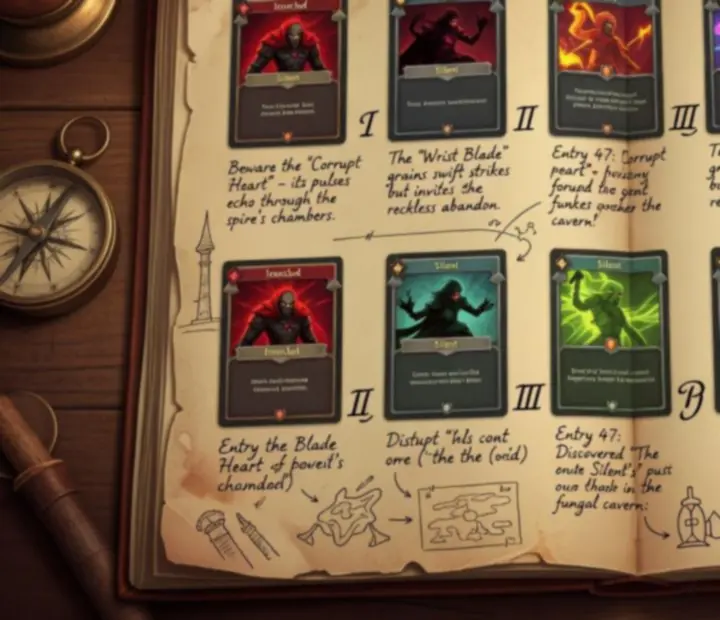
Hand-annotated journal spread ranking the top 10 beginner-friendly cards in Slay the Spire
Annotated study sheet: each card entry marked with "pick when" and "avoid when" notes, plus synergy arrows into common early archetypes.
02 Relics · Synergy Catalogue

Best 10 Relic Synergies

Museum-style entries pairing relics that turn an average deck into a runaway climb.

This editorial walks through ten of the most satisfying and reliable relic pairings in the Spire, from classic energy engines to niche on-hit loops. Each pairing is presented like a museum display plate: acquisition notes, ideal decks, danger signs and famous runs where the combo either soared or bricked.

Instead of focusing on perfect highrolls, we highlight synergies that show up often enough for you to actively route and draft towards.

What you'll learn
How to evaluate relic offers in context, when to reroute to exploit a synergy, and when a "dream" pairing isn't actually worth warping your deck.
Pairs well with
Relics for full relic data and Walkthroughs for route plans that chase specific combos.

Archivist's reminder: a powerful relic combo that doesn't match your card base is just a fancy way to lose on floor 33.

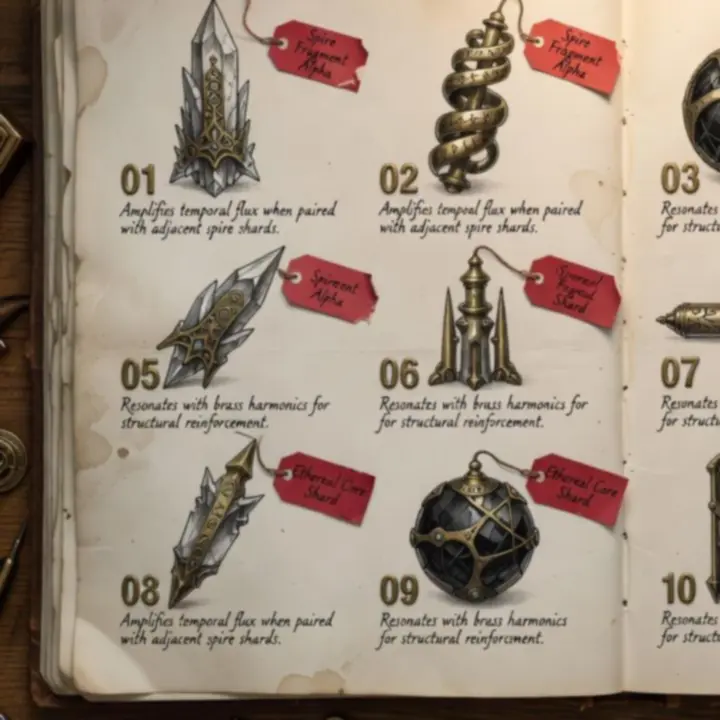
Parchment display of relic sketches connected by synergy notes and brass strings
Each pairing is catalogued with "online by" floors, ideal archetypes and risk markers for curses, HP loss and tempo.
03 Bosses · Encounter Dossiers

Top 10 Boss Fights to Prepare For

The encounters that most often decide whether a promising run dies on the climb.

Some bosses punish a single mistake; others demand you build around them from floor one. This feature ranks ten bosses by how heavily they tax your planning, then breaks down their attack patterns, soft counters and panic buttons.

Each entry reads like a dossier: threat profile, minimum damage or block benchmarks, key relics and cards, and the route decisions that give you the best shot at arriving prepared.

What you'll learn
How to back-solve your route from likely boss outcomes, when to delay upgrades, and what "being ready" actually means in numbers for each fight.
Read alongside
Bosses for detailed stats and Enemies to map how hallway fights set you up for the final clash.

Encounter scribble: if you can't list three ways your current deck answers a boss pattern, you're not ready to head for that act's elites.

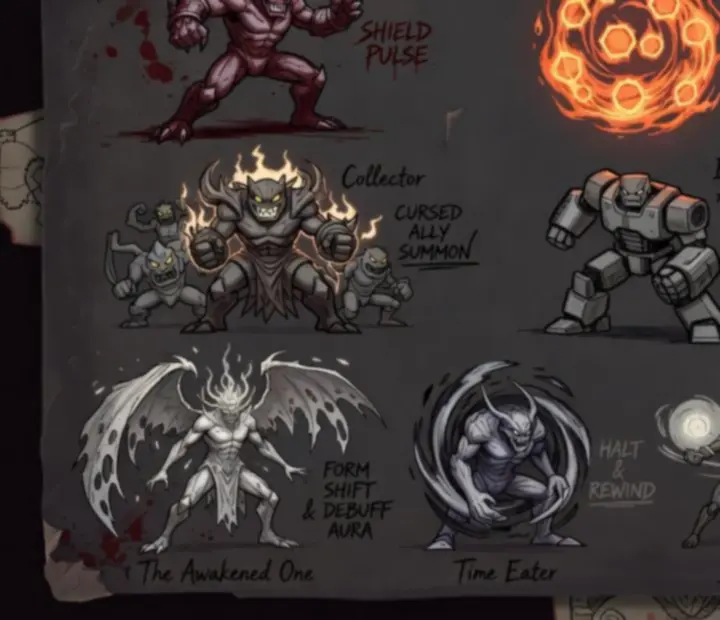
Dark dossier pages showing annotated boss portraits and attack diagrams
Red stamps mark high-lethality turns; brass underlines show "safe" HP buffers based on real AU player runs.

Habits & Risk Routes

Deckbuilding Habits and Risky Paths Worth Taking

These pieces aren't about specific cards or relics. They focus on the patterns behind winning players: how they shape their decks, when they push risky paths, and how they recover when things go sideways.

Mindset · Discipline · Long-Term Wins

Best 10 Deckbuilding Habits

This editorial distils thousands of hours of runs into ten habits that consistently separate stable climbers from frustrated grinders. They're not mechanical tricks; they're ways of thinking that stop your deck turning into a chaotic scrapbook of "cool" cards.

  • Committing early to a clear win condition, even if it's "solid block plus scaling attacks".
  • Respecting energy curves and not overloading on expensive cards without support.
  • Keeping deck size intentional, trimming low-impact cards once your core comes online.
  • Planning upgrade paths like a mini route inside your deck: "these three upgrades unlock my damage plan".
  • Tracking damage and block benchmarks per act instead of guessing.

After Every Reward

Ask: "Does this card advance my main plan, fix a weakness, or enable a new safe line?" If the answer is "not really", skip.

Risk: bloated deck, inconsistent hands.

Before Every Elite

Check: "How do I survive a bad draw on their scariest turn?" If you can't outline it, prioritise defence or control picks.

At Every Campfire

Weigh: "Does this upgrade noticeably improve my next 3 floors, or should I rest / remove instead?"

Habit ledger: tick off each habit as you climb Ascensions. Most players only need 2–3 big mindset shifts to spike their win rate.

Risk · Reward · Route Lore

Top 10 Risky Paths Worth Taking

Elite-Heavy Act I

Take a 3-elite line when your starting relic, early removals or first card rewards give you reliable front-loaded damage or scaling plus enough block to tank one bad turn.

Risk: dying to snowballing book of Stabbing or Lagavulin setups.

Curse-Rich Event Chains

Route into curse-heavy events when you already have removal access or relics that convert curses into energy or strength. Otherwise, treat them as optional stories, not mandatory value.

Late-Shop Detours

Divert to a late shop if your gold plus current relics suggest you can buy a run-defining card, relic or removal. Don't detour just to roll the dice on something "nice to have".

Low-HP Boss Rush

Push for the boss at lower HP when your deck is built to end fights quickly or shrug off patterns via intangible / scaling block, and when delaying only feeds hallway attrition.

Safe but low-ceiling route
Elite pressure, high relic upside
Event-heavy, story-driven value
Boss convergence point

Long Runs · Scaling · Synergies

Best 10 Cards for Scaling Your Run

Some cards don't look impressive in Act I but quietly decide whether you can answer Act III bosses and beyond. This editorial focuses on cards that scale damage or defence as combats drag on, or as your deck passes invisible thresholds.

Each entry explains:

  • What the card needs to be worth adding (energy, support pieces, relics).
  • Which archetypes it slots into naturally, and which it warps.
  • How soon you need to commit to it for the payoff to matter.

Sample Scaling Line

From "barely enough" to overkill in three floors.

This mock line shows how one scaling piece plus card draw and block lets you replace clunky attacks while your damage still climbs each cycle.

Checklist Before You Draft
  • Do I have enough block to survive until the scaling matters?
  • Can my energy and draw support playing this and defending?
  • Is my deck small and consistent enough to see the payoff often?

Scaling rule of thumb: if a card only comes online after the point where hallway fights usually end, it's a liability unless your relics warp the math.

Diaries · Reports · Map Notes

Strategy Diaries, Field Reports and Map Notes

These entries read like pages torn straight from an Australian player's field journal: diagrams, crossed-out lines and honest stories about when to skip, when to tackle elites, and how to steer a run that's going off the rails.

Strategy Diary

When to Skip Cards

Step 1 · Identify Your Plan

If you can't explain your deck's current plan in one sentence, your first "pick" should usually be a skip until that plan clarifies.

Step 2 · Check Role Overlap

Does this card replace a weaker option or just duplicate an okay one? If it doesn't clearly upgrade a slot, skip and keep your draws clean.

Step 3 · Look at Next 3 Floors

Ask: "Does this card dramatically improve my odds against the next elite, event or boss?" If not, a skip is often safer than a "maybe".

Diary Excerpt

"The run that taught me to skip was an Act II wipe where every reward was 'fine'. I took them all. By the boss, my deck could do everything a little… and nothing well enough."

Treat each skip like a quiet upgrade to your future draws. The strongest decks in our database often have surprisingly few Act I additions.

Field Report · Elite Preparation

How to Prepare for Elites

Mid to High Ascension

Threat Analysis

Elites are where runs are made or broken. They offer relics that push your deck from "getting by" to "crushing", but they also compress multiple high-damage turns into just a few floors.

  • Plan at least one answer to each elite type in the act.
  • Track your expected damage and block by turn 3 of the fight.
  • Arrive with potions you're willing to spend, not hoard.

Elite Readiness Checklist

  • Act I: Can you consistently deal with 30+ block or 20+ AoE by turn 3?
  • Act II: Do you have scaling or targeted control for multi-enemy elites?
  • Act III: Is your deck stable under frail, weakened or other debuffs?

If you answer "no" to two or more, reroute towards campfires and events until your deck catches up.

Map Notes

Adapting Mid-Run

Even the cleanest plan can be smashed by bad events, awkward relics or a misread boss. This piece focuses on how to redraw your route and rebuild your deck once it's clear your original plan won't carry.

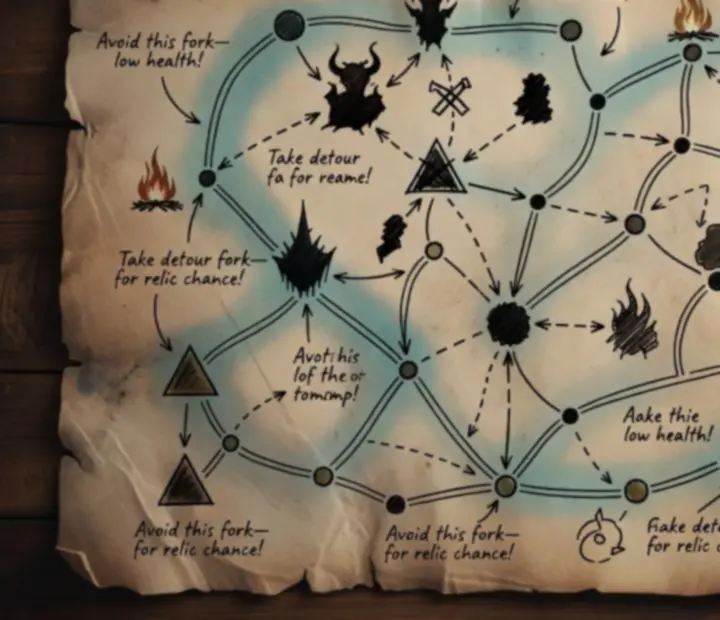
Annotated Spire route map with crossed-out paths and new arrows showing an adapted mid-run plan
Circles mark "turning point" events from real runs; arrows show where successful players changed course instead of doubling down.

Reality Check Node

After each act, rate your deck on damage, defence, scaling and consistency from 1–5. Any score under 3 is a priority to fix, even if it means skipping tempting relics.

Route Pivot Node

If your deck underperforms, pivot away from triple-elite lines into safer event / campfire routes while you patch weaknesses.

Risk: over-correcting into routes that leave you underpowered for the act boss.

Deck Surgery Node

Use shops and removes to cut the cards that no longer fit your adapted plan, even if they were once your favourite pieces.

Adaptation mantra: "Play the deck and route you have, not the one you wished this run had become."

Archive

Recent News & Editorials

A newspaper-inspired snapshot of the latest strategy updates, balance thoughts and community highlights from the Spire climbing scene.

Lead Editorial

Shifting Metas and Safe Fundamentals

Australian Edition

Patch tweaks, new seeds and community discoveries constantly nudge the Spire's meta, but the habits outlined on this page stay reliable anchors. Our latest editorial series compares current popular builds with long-standing fundamentals, showing where it's safe to innovate and where discipline still wins.

We track data from Australian and global players using the Database, then invite contributors to write diary-style reflections on what actually works in their day-to-day climbs, not just highlight reels.

Expect future instalments to spotlight new card evaluations, relic re-prioritisations and fresh examples of risky paths that pay off under updated balance.

Plan Your Next Run

Turn Editorial Insight into a Winning Route

Use this editorial archive as a briefing room before you commit to your next climb. Then step through our structured strategy services and knowledge pages to design a run that suits your style.