

The Spire's Strategy Journal

Guides Archive of the Spire

Deckbuilder • Roguelike Strategy • Route Decisions • Field Reports

Open your field journal to a double-page spread of annotated cards, looming Spire sketches and scattered relics. This is where every run is dissected: how you build your deck, which routes you chase, and when you deliberately walk into danger.

An open expedition journal showing a hand-drawn Spire, cards and relic notes
Margin note: "Treat every card like a question: does this actually help the deck survive the next two floors?"
"The Spire rewards intent, not greed. A tidy 18-card deck with a plan will out-climb any 32-card pile of 'pretty decent' options."
Filed under: Run Anatomy – cards, relics, routes, and how you stitch them together.

Orientation

How to use this archive

This page is your table of contents for the Spire Knowledge Archive. Each section describes a different format of guide – from card study sheets to encounter dossiers – and points you towards deeper resources across the site.

Use the Route Plan path below as a mental model: start with coherent decks, then layer in card evaluation, relic priorities, and route risk before you specialise into bosses, archetypes and Ascension pushes.

Act I – Foundations

How to build a coherent deck. Learn to trim, skip, and commit to a plan that survives early elites.

Risk: Overvaluing raw power over consistency.

Act II – Evaluation

Deep dive into card value and relic prioritisation so every reward screen becomes a deliberate choice.

Risk: Taking good cards that are bad for this deck.

Act III – Routecraft

Use route and map guides to balance elites, campfires and events – and know when a risky path is worth the bruises.

Risk: Dodging elites so hard your deck never scales.

Beyond – Mastery

Lean on enemy dossiers, boss files and archetype clusters to push Ascension or speedrun consistent wins.

Risk: Ignoring adaptation when a run goes sideways.

Safe fundamentals
Challenging concepts
Optional depth dives
Ascension-level mastery
Deck Foundations

How to build a coherent deck

Most failed runs die long before the final boss – usually when a deck drifts into a pile of unrelated ideas. These guides teach you to say "no" to cards, lock into a direction, and let relics nudge rather than derail your plan.

From opening hand to final floor

Coherent Deckbuilding • Run Structure • Risk Management

Recommended first stop

We break the run into four passes over your deck: opening, first elite, mid-Spire pivot, and boss prep. At each pass, you’ll learn which cards belong, which are temporary scaffolding, and which are bait.

Expect practical examples like "Ironclad block-centric run that adds only 6 attacks" or "Silent Poison deck that skips three seemingly great shivs" – plus decision trees for when a relic suggests a pivot.

Deeper detail in Deckbuilding page

Rule of thumb: if a card doesn’t move you towards your win condition or patch a specific weakness, skip it – even if it’s shiny.
Card Study Sheets

Card evaluation guides

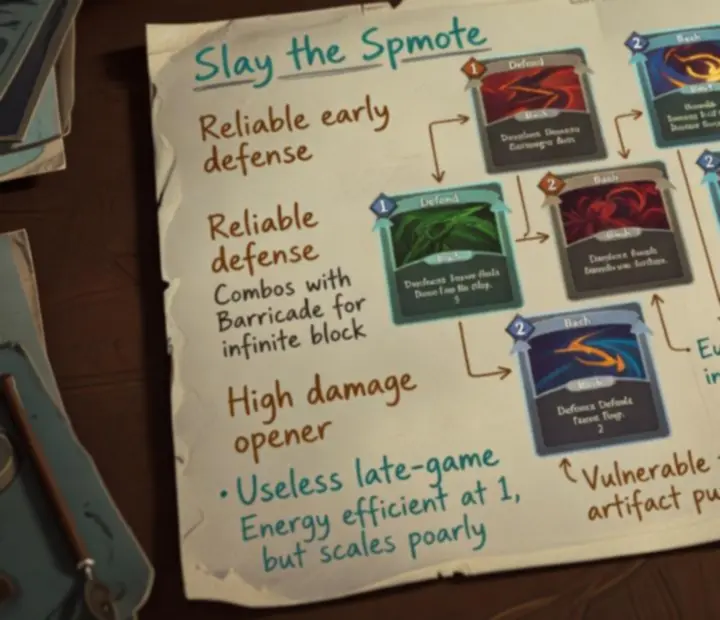
Every card study guide in the archive uses a structured sheet: cost, base effect, scaling, synergies, path risks and upgrade breakpoints, all on parchment-style layouts you can skim mid-run.

Annotated card study sheet showing cost, effects and synergy notes
Margin scribble: "Zero-cost skills look harmless until you realise they still dilute draws. Count what they actually replace."

Anatomy of a card decision

From reward screen to route plan

Core questions

  • What problem does this solve? Block, damage, scaling, consistency or economy.
  • When is it strongest? Early hallway fights, elites, bosses, or only after upgrades.
  • What does it replace? Identify which card effectively leaves your deck when you add this one.

Sheets you’ll find in the archive

Treat uncommon and rare picks as route commitments: if you take them, adjust future elites and campfires accordingly.

Relic Archive

Relics: powers unveiled

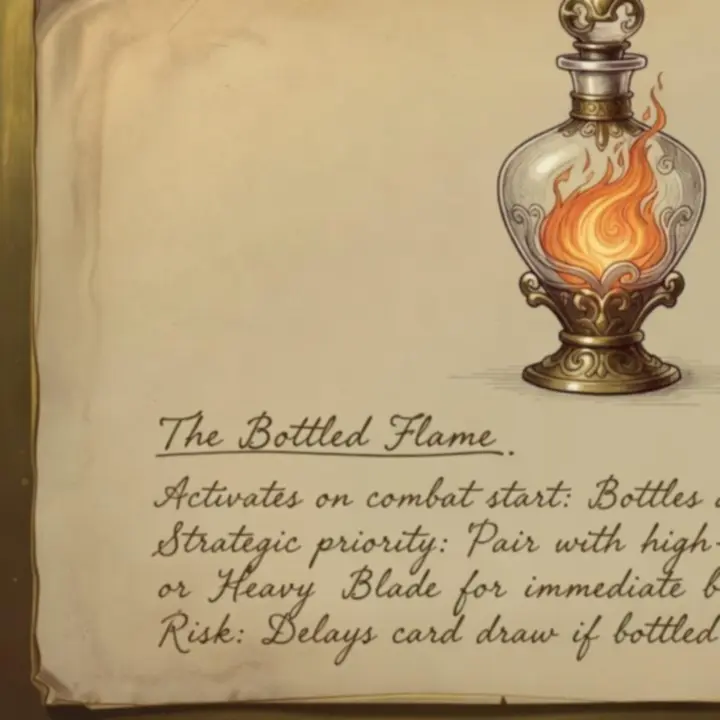
Relics quietly dictate the shape of your deck. Our relic entries read like a museum catalogue crossed with an expedition log: each piece is drawn, tagged by tier, and annotated with when it’s worth walking a risky path to claim it.

Relic catalogue entry with illustration and descriptive plate text
Filed note: "This one begs you to fight elites early. Mark routes with at least two campfires after it."

Spire Relic Record • Ascension Studies

Reading a relic like a route instruction

Each relic entry in the archive answers three questions: what it does in practice (not just rules text), what kind of deck wants it most, and how it should change your route.

We use side-by-side examples of runs that respected or ignored a relic’s demands – for example, taking a high-risk, high-reward energy relic and then dodging elites anyway.

Layer this with the relics page for searchable entries, and cross-reference with Best 10 relic synergies for curated pairings that feel like cheating when they come together.

Field Reports

Enemy tactics & field reports

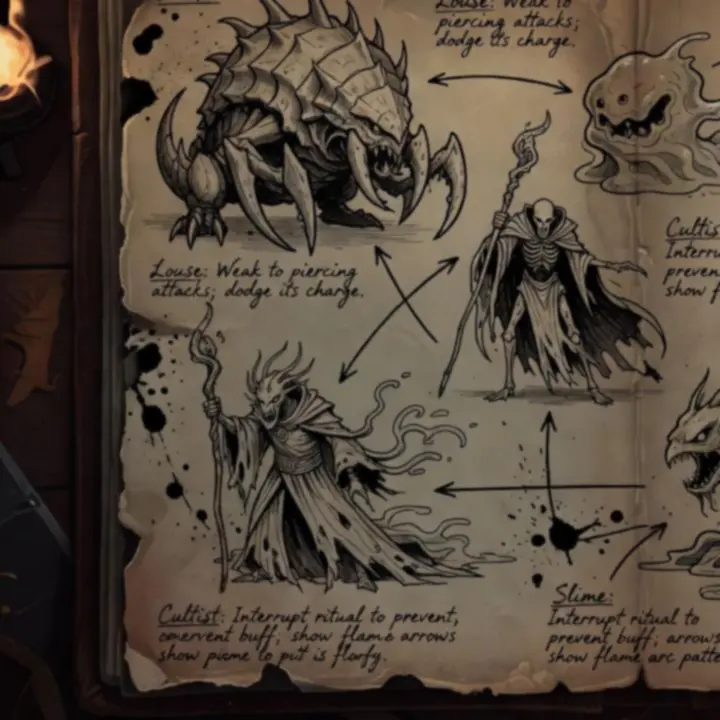
Enemy guides are written like field notes from a long campaign: attack patterns, opening turns, scaling moves and the moments where you must hold back or go all in.

Identifying safe and lethal turns

Hallway enemies • Elites • Ascension variants

Our enemy sheets map out patterns in plain language. Instead of memorising numbers, you’ll learn phrases like "danger turns" and "setup turns" for each major foe.

Expect callouts like Do not half-commit here on multi-hit turns, and Great upgrade window where campfires appear just before spike fights.

We also include Ascension notes that highlight how extra damage, health or added debuffs reshape the fight.

Browse enemy field reports
Downloaden op Google Play Downloaden in de App Store
What you’ll track
Opening hand priorities, when to play around spikes, and how much block makes a turn "safe".
Route integration
Suggestions on when to avoid or hunt specific elites based on your current deck profile.
Cross-reference
Links out to boss dossiers and map walkthroughs so you can see how these fights sit in a full run.
Enemy field report sheet with attack patterns and tactical notes
Underline: "Fights are puzzles, not DPS checks. The solution often starts two turns earlier than you think."
Encounter Dossiers

Boss encounter dossiers

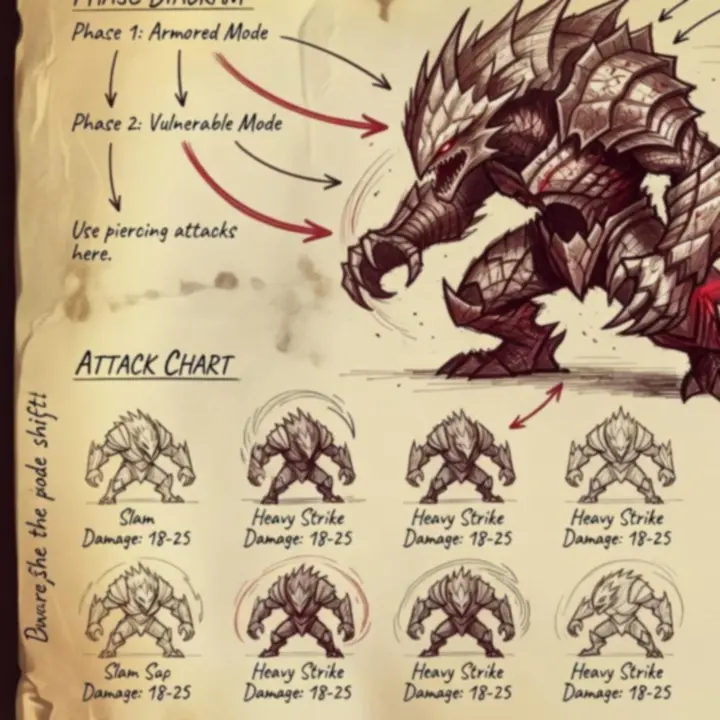
Boss guides in the archive read like classified files: threat profiles, phase diagrams, and the minimum deck quality you should demand before stepping onto that final lift.

Boss dossier sheet with vulnerability diagrams and phase notes
Red ink: "If your plan vs this boss is 'hope for good draws', you don’t have a plan."

Turning bosses into known quantities

Act I–III bosses • Heart prep • Ascension thresholds

End-of-act decisions

Each boss dossier opens with a deck readiness check: how much damage, block, scaling or specific interaction you should have before facing them. We pair this with simplified phase diagrams that show when to hold back resources and when to empty your hand.

We also highlight route implications: which elites or events help you prepare for a particular boss, and when it’s correct to take a slower, safer path to shore up a weakness.

Consult the full files on the bosses page, or approach them via walkthrough routes that end in specific matchups.

Route Maps

Route and map decision-making

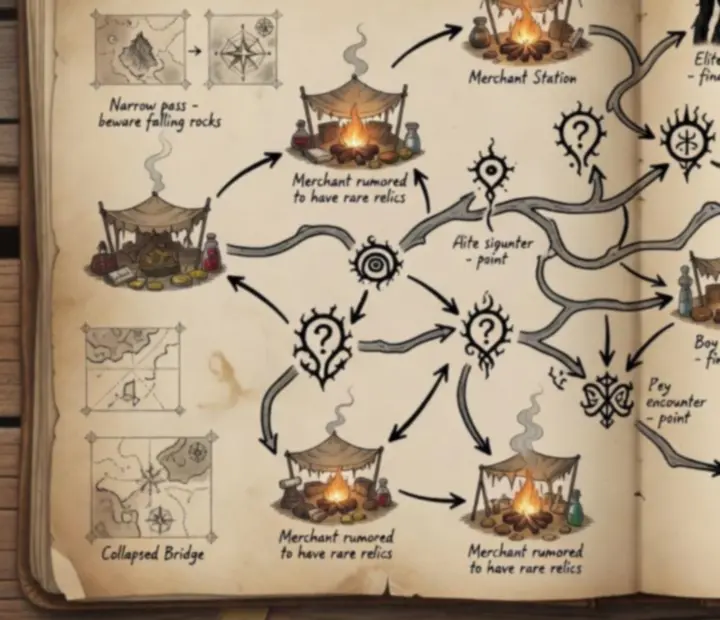
These guides focus on the Spire itself: branching paths, node types and when the right move is to deliberately step into an ugly-looking route because your deck is ready for it.

Reading the first three floors

We walk through examples of safe and greedy openings, showing how early elites, merchants and fires reshape your plan by Act I’s midpoint.

Risk: avoiding early elites so long that your deck never scales into Act II.

Mid-run pivots

When a lucky relic or card forces you to reconsider your path, use our annotated maps to see how to pivot without throwing away safety.

Risk: over-pivoting around a single rare card.

Risky paths worth taking

We catalogue situations where the risk is mathematically and strategically justified – including examples for each character and archetype.

Risk: misreading a "must high-roll" line as a calculated gamble.

Note to self: "You’re not dodging elites; you’re deferring power spikes. The Spire always sends the bill."

Follow full route walkthroughs
Branching Spire map with annotated nodes for elites, events and campfires
Key: red for elites, teal for events, brass for campfires and merchants. Each line is a different philosophy on how to climb.
Archetype Clusters

Deck archetypes & synergy clusters

Once your fundamentals and route sense are solid, archetype guides help you intentionally steer towards powerful builds without jamming every synergy card you see.

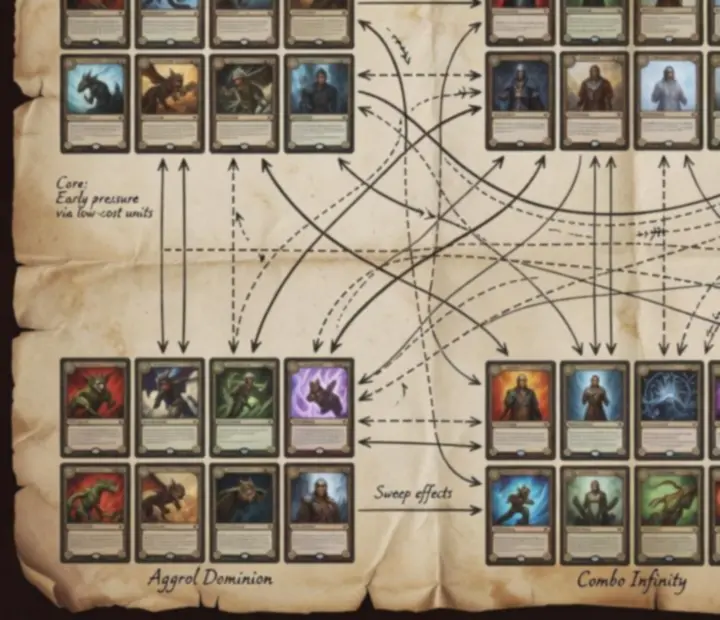
Diagram of deck archetype clusters and supporting cards
Cluster sketch: core pieces at the centre, support and tech cards orbiting like run-specific satellites.

From loose ideas to tight builds

Seeing your deck as a cluster, not a list

Archetype guides visualise decks as clusters: core engine cards, enablers, payoffs and failsafes. Instead of copying a list, you learn which roles must be filled and which pieces are flexible.

We provide examples like Poison, Barricade, Claw, Orb-focused Defect, Power-heavy Watcher, and "small, sharp" generic decks that lean on relics and tight play rather than flashy combos.

Visit the deckbuilding page for full archetype write-ups, then search the database for specific cards and relics that slot into each cluster.

Editorial Top 10s

Top 10 editorials & annotated lists

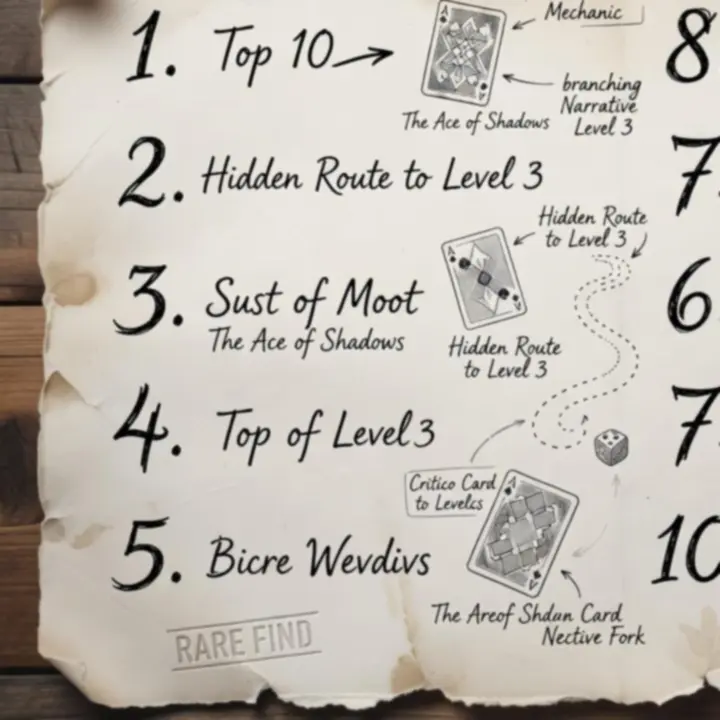
Our Top 10 and Best 10 features are not just ranked lists – they are mini-essays with annotated diagrams, showing why each choice matters and how to apply it mid-run.

10
Curated strategies

Risky paths worth taking (and when to walk away)

One of our flagship editorials, Top 10 Risky Paths Worth Taking, breaks down infamous map decisions – double elites before a campfire, early shop dives, late-event gambles – and grades them by deck state, relics and Ascension level.

Each entry comes with an annotated map fragment, showing the safe route you skipped, the reward you chased, and what actually happened on a real run.

You’ll also find companion pieces like Best 10 deckbuilding habits, Top 10 cards for new players, Best 10 relic synergies and Best 10 cards for scaling your run, all presented as richly illustrated archive pages.

Editorial note: "The goal isn’t to copy someone else’s list – it’s to build instincts so these decisions feel obvious in the moment."

Browse all editorial features
Top 10 editorial page with large numbers and parchment annotations
Side margin: "Circle the one habit you’ll actually apply next run. Ten tiny changes beat one massive theory."

Next steps

Chart your next climb

Whether you are just learning how to leave Act I consistently or pushing high Ascension heart kills, treat this page as your launchpad. Pick one weakness – card evaluation, relic greed, route fear, or boss anxiety – and follow the linked guides until it feels like a strength.

If you are not sure where to start, reach out and we can point you towards the most relevant sections for your current skill level.

Searchable archive

Use the database to look up cards, relics, enemies and events referenced in any guide.

Prefer a linear tour? Follow curated walkthroughs