Each report below condenses dozens of runs' worth of bruises into clear, practical notes. Treat it like a field manual: flip to it mid-run, sanity-check a risky path, or prep before diving into a new Ascension.
Field Report
Enemy Field Report Archive
Acts 1–3 • Attack patterns • Quirks
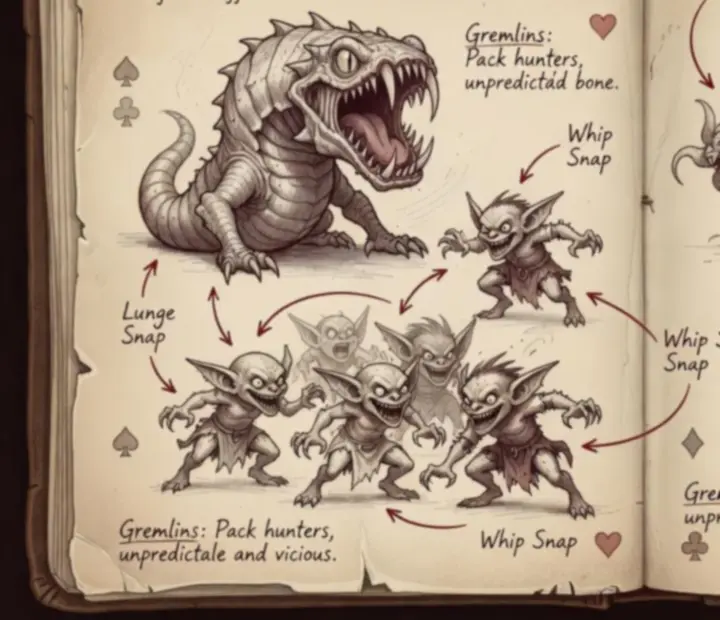
Pages of ink-sketched foes: Slimes mid-split, Gremlins mid-cackle, Cultists mid-chant. Each entry logs base HP, usual intents, nasty surprises and the turn where fights tend to spiral out of control.
Typical patterns
Early-Act enemies test fundamentals: blocking on multi-strikes, respecting scaling buffs, and thinning your deck before status cards clog it. Many "harmless" foes quietly stack Vulnerable or Strength if ignored.
Practical notes
Prioritise enemies that generate extra enemies (e.g. spawners, summoners) before pure damage dealers.
Check whether an enemy's damage ramps each time it uses a move; scale your block plan accordingly.
On new Ascension levels, assume +1 intent variety and play a touch safer until you've seen the set.
If you can't describe an enemy's last three turns from memory, it's not "safe" – it's just unfamiliar.
Encounter Formations
Formation and Behaviour
Group tactics • Positioning • Target priority
The Spire loves nasty pairings: debuffer + heavy hitter, blocker + scaler, exploders behind walls. Understanding formations turns chaotic rooms into solvable puzzles.
Encounter Layouts
How formations shape each fight
Act 1
Act 2
Enemy behaviour isn't just about cards they play – it's about who stands next to whom. Two weak hitters become a threat if they both inflict Vulnerable before a big swing from a third ally.
Bodyguard formations – a tanky frontliner shielding fragile, high-impact casters – call for bypass tools like Piercing Wail or multi-target block reduction.
Exploder pockets buried behind blockers demand an early damage spike or crowd control before their timers pop.
If you can't kill the scariest enemy in three turns, change the formation by blocking hard and removing support instead.
Mini-boss Dossiers
Mini-Boss & Elite Dossiers
Elites • Signature abilities • Counterplay
Elites are voluntary disasters: you chose this fight for relic equity. These dossiers explain when that trade is worth it – and how to walk out alive.
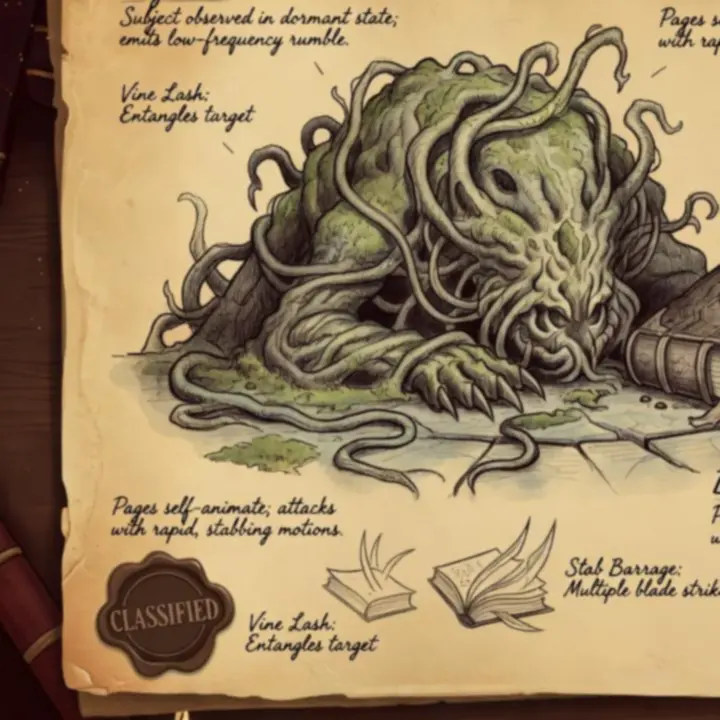
Sample Elite: Book of Stabbing
Acts 2–3 • Scaling multi-strike • Block pressure
High attrition risk
Signature pattern
Starts with modest multi-hits, then adds more stabs every few turns. Damage outpaces most early-Act block unless you either scale Dexterity, stack Weak, or end the fight quickly.
Counter-strategy
Prioritise Weak, Dexterity and front-loaded block cards before this elite.
Take small, efficient attacks over slow scaling if you're likely to face it with low HP.
On higher Ascension, reroute via safer nodes if your deck lacks consistent block plus Weak.
Elites are optional – your ego isn't. Skip when your deck and relics say "not yet".
Attack Patterns
Attack Patterns and Warnings
Multi-strikes • Debuffs • Status floods
Every enemy dance has a rhythm: buff, poke, explode. The more patterns you can name, the fewer runs you lose to "I didn't think it would hit that hard".
Multi-strike warnings
Multi-hit attacks punish narrow, high-value block. A single big block card is unreliable when damage is split into 3–6 hits.
Plan: Spread your defence
Debuff openers
Common pattern: Turn 1 buff/debuff, Turn 2+ damage. Eat the first debuff if needed, but stabilise before the second stacks.
Watch: Vulnerable + Strength
Status flooding
Enemies that add Wounds, Dazed or Burns quietly tax your future turns. Your deck feels fine now, then collapses two shuffles later.
Counter: Card draw and cleansing
When you see an unknown "mystery" intent, assume it's worse than the last attack and defend like it.
Scaling by Act
Enemy Scaling by Act
Acts 1–3 • HP • Intents • Complexity
The Spire doesn't just add HP. It layers intent variety, combo patterns and punishing synergies. Understanding that curve helps you tune your deck between Acts.
Act 1 – Fundamentals test
Low-to-medium HP, simple loops. Enemies punish greed and ignoring scaling buffs, but rarely demand perfect turns. Use this Act to trim your deck, secure a defensive backbone and pick a direction.
Act 2 – Punishment layer
More multi-intent enemies (attack + debuff), more status floods and nastier openers. If you limp out of Act 1 with shaky defence or no plan into elites, Act 2 will expose it fast.
Act 3 – Execution check
High HP sponges with layered buffs, scaling damage and complex cycles. You need a coherent kill plan plus ways to shrug off debuffs; "good stuff" decks with no focus often die slowly here.
Deck adaptation tips
Add one high-impact defensive card between Acts, not five mediocre ones.
Pick relics that solve scaling problems (Weak, Dexterity, strength denial) over flashy but narrow effects.
Use campfires to patch the weakest part of your plan before the next Act's elites, not just to chase upgrades you like.
Archetype Notes
Field Notes: Dangerous Archetypes
Artifact spammers • Poisoners • Blockers
Certain enemy families demand specific answers. Recognise them early and you can draft counters before meeting their nastiest members.
Threat Taxonomy
Notorious archetypes to respect
Artifact stackers
Enemies that open with multiple Artifact stacks blunt your first debuffs and crowd control. If your build relies on Weak, Poison or Strength-down, these foes can invalidate your early turns.
Carry at least one way to hit through Artifact – raw damage, multi-hit attacks or non-debuff scaling.
Poisoners & chip damage
Poison, burns and repeated small hits drain you between fights, not just in them. The danger is arriving at elites with half the HP you expected.
Turtle blockers
High block, low damage enemies seem safe… until they stall your deck long enough for their friends to stack debuffs or strength. Damage-per-turn checks appear here; slow builds need scaling or piercing damage.
Priority threat rule
If an enemy type hard-counters your current build, mark it mentally as "orange" or "red". Avoid paths with multiple copies, and value cards and relics that specifically answer that archetype more highly.
Legendary Foes
Legendary Spire Foes
Gremlin Leader • Book of Stabbing • Exploder
Some regular enemies live in players' heads rent-free. This dossier covers why they're infamous – and how to turn dread into respect.
Gremlin Leader
Summons, commands and occasionally whiffs. The real threat is the random turn where it calls for a huge multi-hit while minions are still up. Kill the Gremlin Leader quickly, but trim the scariest minions when damage lines up.
Book of Stabbing
A walking lesson in respecting scaling multi-strike. If you enter this fight at low HP without Weak or strong block, you're effectively accepting a coin flip.
Exploder & friends
Timers plus adds. Every turn you stall converts into future damage you can't block. Prioritise these even if another enemy is dealing more immediate damage – future you will thank you.
When a name makes you groan, that's a curriculum note: review the pattern, find the counter, reclaim the matchup.
Status Effects
Status Effects and Debilitations
Vulnerable • Frail • Weak • Burns • Wounds
The Spire rarely kills you in one hit. It softens you up with debuffs and junk cards first. Understanding each effect's real cost lets you decide when to cleanse and when to tank it.
Negative Effect Ledger
Reading the fine print on debuffs
Vulnerable
Multiplies damage taken. The danger spikes when paired with pre-announced big hits or multi-strikes. Often worth over-blocking for a turn just to avoid a lethal combo.
Frail & Weak
Frail taxes block, Weak taxes damage. In long fights, letting either stack can effectively halve your deck. Prioritise removing whichever your build relies on most.
Status cards
Burns, Wounds and Dazed don't just hurt; they push your key cards further down the draw pile. Card draw, exhaust and scry mitigate them as well as actual cleanse tools.
If you don't know how a debuff scales on higher Ascension, treat the first stack like it's double strength.
Intent Icons
Enemy Intent Deciphering
Attack • Buff • Debuff • Defend • Mystery
Intent icons are the Spire's courtesy warnings. Learning their nuances turns "surprise" deaths into informed, calculated risks.
Icon anatomy
Attack icons signal raw numbers; buff and debuff icons hide future problems; defend icons mean the enemy is buying time. Mystery icons usually mark thresholds, phase changes or high-impact one-offs.
Practical reads
When you see attack + buff, treat the next turn as lethal-level until you've seen the follow-up.
If multiple enemies show debuff at once, over-block slightly – the next cycle may chain damage into those debuffs.
Use "defend only" turns as windows to set up scaling powers or big draws safely.
Elite Preparation
Elite Enemy Preparation
Route planning • Risk vs reward • Act-based elites
Elites are your main relic income and your main source of regret. This section focuses on when to take them and how to plan the fights around your current deck.
Normal enemy
Elite
Event
Boss
Act 1 elites
First elite usually defines your run. Prioritise one or two if your deck has a clear damage or defence profile and you're above half HP.
Reroute if: no removal, no scaling, no burst.
Act 2 elites
Much more punishing. Only fight when you've solved a key weakness: big hits, multi-strikes or status floods. Events just before can patch holes or ruin you – choose carefully.
Act 3 elites
Optional exams. If you already have a boss-ready build, you can often skip these unless you desperately need a high-impact relic or feel overpowered.
When in doubt, trace two routes on the map: relic-hungry and survival-minded. Swap mid-run if enemies roll nastier than expected.
Even veterans misread intents or discover a new pattern at higher Ascension. The difference between a lost run and a heroic stabilisation is how quickly you adapt.
Journal Excerpts
Stabilising when a fight goes sideways
Excerpt – Act 2 "Turn 3, the enemy looped into a second Vulnerable stack I hadn't accounted for. I stopped chasing lethal, spent a whole hand on defence, and burned a potion I'd been hoarding for the boss. The run survived because I treated that turn like the boss fight instead."
Slow down after a surprise. When an enemy does something unexpected, play the next turn as if you're learning a new boss: defend first, observe, then adjust.
Revalue your potions. Once a fight turns critical, potions become cheaper than HP. Use them early enough to change the outcome, not as consolation prizes.
Update your mental file. After the run, jot a one-line summary: "This enemy can reapply Weak" or "Timer explodes for more than I thought" and review it before your next attempt.
Enemy Lore
Enemy Lore: Life Outside the Spire
Vignettes • Motives • Ecology
Knowing why enemies fight the way they do won't change the maths – but it can make each encounter feel like a story, not just a damage puzzle.
Gremlin Camps Somewhere beyond the Spire's base, Gremlins argue around smoky campfires, bragging about who stalled which climber for the longest. Their chaotic attack patterns feel less random when you imagine them competing for the loudest hit.
The Book's Pages The Book of Stabbing reads more like a ledger than a spellbook. Each fresh gouge is another line item: climber HP lost, block broken, relics denied. It stabs on schedule because that's how it balances its accounts.
Exploder Ecology Exploders don't think about victory; they think about spreading fragments. Every time one detonates, shards drift deeper into the Spire, seeding more hazards for future runs.
Treat these vignettes as mental hooks – if you remember the story, you'll remember the pattern.
Link your enemy knowledge to the rest of your run
These enemy files are only one chapter of the Spire Knowledge Archive. Tie them into your deck, routes and boss prep to get the full picture.